In the Field: Celebrating World Armadillo Day in Brazil
This World Armadillo Day, I want to take you with me to Brazil, where I have the privilege of working every day to understand better and protect one of the most fascinating animals I know: the giant armadillo.
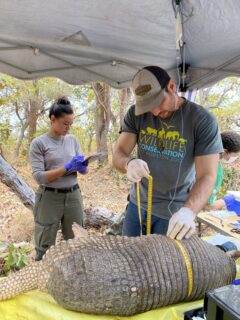
My name is Gabriel Massocato, and I am a biologist of the Giant Armadillo Conservation Program at the Instituto de Conservação de Animais Silvestres (ICAS). For years, I have been working in the field across the Brazilian Pantanal and other ecosystems, following giant armadillos and learning more about their lives, their movements, their families and the challenges they face.
Being able to work with these animals in the wild is an incredible privilege. But it also comes with a great responsibility.
Getting to know a hidden giant
Giant armadillos are the largest armadillos in the world, but they remain incredibly difficult to study. They are mostly nocturnal, spend much of their time underground and can travel long distances through their habitat. We still have so much to learn about them.
Much of my work involves going into the field to capture and monitor individual armadillos, collect biological information, follow their movements using GPS technology, and learn about their behavior and ecology. We also use camera traps to observe what happens when we are not there.
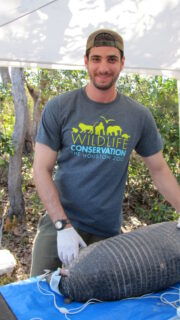
Over the years, we have been able to follow individual giant armadillos for many years, watching them grow, reproduce and move through the landscape. Every individual teaches us something new.
And the more we learn, the more we understand how important this species is.
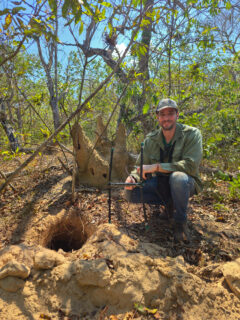
Giant armadillos are what we call ecosystem engineers. Their enormous claws allow them to dig deep burrows that provide shelter for hundreds of other species. What looks like simply a hole in the ground can actually become a refuge for birds, mammals, reptiles, amphibians and invertebrates.
So when we protect a giant armadillo, we are also protecting a whole community of wildlife around it.
Conservation doesn’t happen alone
One of the things I have learned during my years in the field is that protecting wildlife also means working closely with the people who share their landscapes.
In the Pantanal, we have been working with local communities and ranches to strengthen their ability to respond to wildfires through community fire brigades. These teams are made up of local residents and workers who receive training and equipment to help prevent and fight fires on their properties.
Wildfires are a natural part of the Pantanal, but increasingly severe and frequent fires can have devastating consequences for wildlife and their habitats. By supporting people on the ground and strengthening their capacity to respond, we can help protect much larger areas of habitat; including the places where giant armadillos live.
For me, this is a very important part of conservation. It is not only about following animals and collecting scientific data. It is also about building partnerships, sharing knowledge and empowering the people who know and care for these landscapes every day.
The Houston Zoo’s support helps us make this kind of work possible too. Conservation is strongest when we work together; from researchers in the field, to local communities, to partners and supporters thousands of miles away.
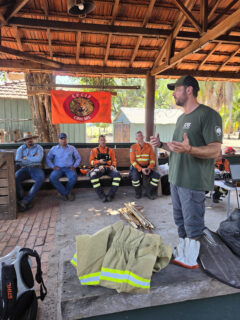
This is where the Houston Zoo has become such an important partner for us.
The Zoo’s support helps make our field conservation work possible, allowing us to continue monitoring giant armadillos, conducting research, and developing conservation actions in Brazil.
But there is another part of this partnership that I find particularly important.
Zoos have the extraordinary ability to connect people with wildlife. Every day, visitors to the Houston Zoo have the opportunity to discover species from around the world and learn about the conservation challenges they face in the wild. With every visit and membership to Houston Zoo, you are helping save giant armadillos in the wild.
For me, it is very meaningful to know that when someone in Houston learns about the giant armadillo, they are also learning about the work we are doing here in Brazil.
From the Pantanal to Houston
I recently had the opportunity to visit the Houston Zoo and meet the people who work behind the scenes to care for the animals and support conservation around the world.
It was a very special experience for me.
I was proud to share my work with the Zoo’s team and to see how passionate they are about wildlife conservation. I also had the chance to learn from their different departments and discover the many ways they are working to protect species, not only at the Zoo, but also in the wild.
As a Wildlife Warrior, I feel very lucky to be part of this larger conservation community.
I bring what I learn back with me to Brazil, just as we share our experiences from the field with our partners and supporters around the world.
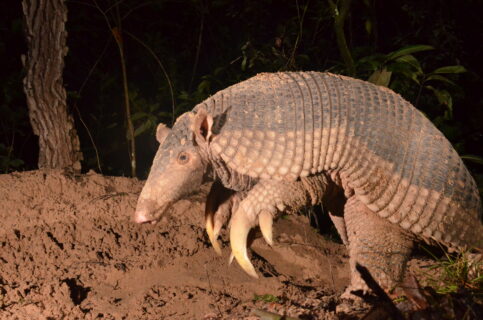
Happy World Armadillo Day!
This blog was written by Gabriel Massocato, a Houston Zoo Wildlife Warrior and Houston Zoo Conservation Research Associate from our partner, the Giant Armadillo Project in Brazil.