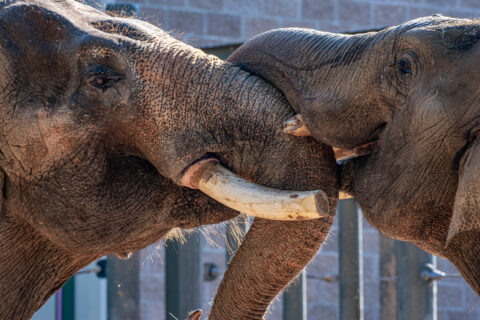
Working Together to Save Elephants
On this World Elephant Day, we’re highlighting our commitment to the fight against elephant endotheliotropic herpesvirus (EEHV). Over the coming years, in collaboration with Baylor College of Medicine (BCM), members of the Association of Zoos and Aquariums (AZA), and generous supporters, we’ll expand vaccine distribution to every elephant that needs it, target additional strains of EEHV, and develop a vaccine to extend protection to African elephants.
The science is complex, but the goal is simple: Leave no elephant behind.
The Journey So Far
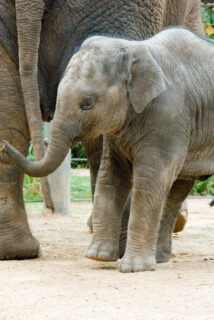
In 2008, our Houston Zoo family mourned the death of a two-year-old Asian elephant calf named Mac. His sudden illness was caused by EEHV, a devastating viral disease that’s especially fatal to young elephants living in human care and in the wild. After learning about Mac and seeing an opportunity to lend his expertise as a virologist, Dr. Paul Ling at Baylor College of Medicine reached out to our Zoo, and we soon formed a unique research partnership. Since then, in collaboration with elephant care teams and veterinarians across AZA and around the world, we’ve achieved remarkable discoveries, from prevention and diagnostics to a lifesaving treatment protocol developed at Houston Zoo.
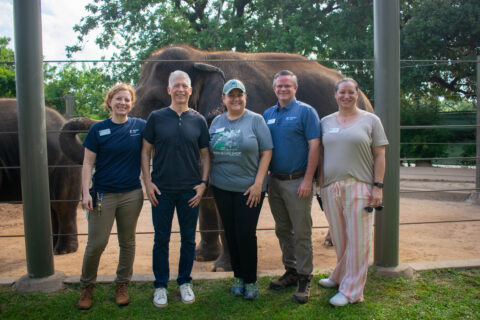
We reached our most historic milestone yet in 2024, when 40-year-old female Asian elephant Tess received the first dose of the experimental EEHV mRNA vaccine developed in partnership with BCM. Months later, the efficacy of the new vaccine was first documented when two vaccinated juvenile elephants at Cincinnati Zoo were exposed naturally to EEHV but recovered without clinical disease. For our team and elephant care professionals around the world, this was a monumental victory, years in the making — and it all started with a big idea right here in Houston, Texas.
Expanding the Fight Against EEHV
We’ve taken incredible strides to safeguard elephants from EEHV, but much work remains for Houston Zoo and Baylor College of Medicine across several fronts.
There are multiple strains of this virus. While the current vaccine targets the strain deadliest to Asian elephants, the other strains can also be deadly. To provide complete protection for Asian elephants, we’ll expand distribution of the current vaccine and create new variants so that more elephants can be saved. Simultaneously, we’ll develop a real-time EEHV “radar system” to track the various strains globally using non-invasive samples like saliva or feces. This work is especially vital for elephants in range countries, where getting blood samples can be challenging.
Houston Zoo is home to Asian elephants, but we’re committed to protecting African elephants, too. The adaptability of the mRNA vaccine platform creates exciting opportunities to target the strains that are deadliest to African elephant calves. Working with Dr. Ling at BCM, we’ve kicked off a 4-year plan to expand his laboratory’s capacity to generate prototype vaccines and conduct clinical trials.
Powered by Collaboration and Philanthropy
While Houston Zoo is the principal convener of the EEHV vaccine project, we’re part of a network of elephant care professionals, researchers, and supporters. We’re thankful for our partnerships with Dr. Ling and his team at Baylor College of Medicine, our colleagues across AZA, and stakeholders around the world. And we’re deeply grateful for the philanthropic support from leading donors in Houston and our peer institutions. In the last 16 years, these generous donors have contributed more than $7.4 million in critical funding to advance our elephant-saving efforts.
Thank you for taking a moment on this World Elephant Day to learn about our efforts to protect elephants at our Houston Zoo and across the globe.
Want to join the fight against EEHV? Support your Zoo by becoming a Member, donating, or visiting us to meet our Asian elephant herd!