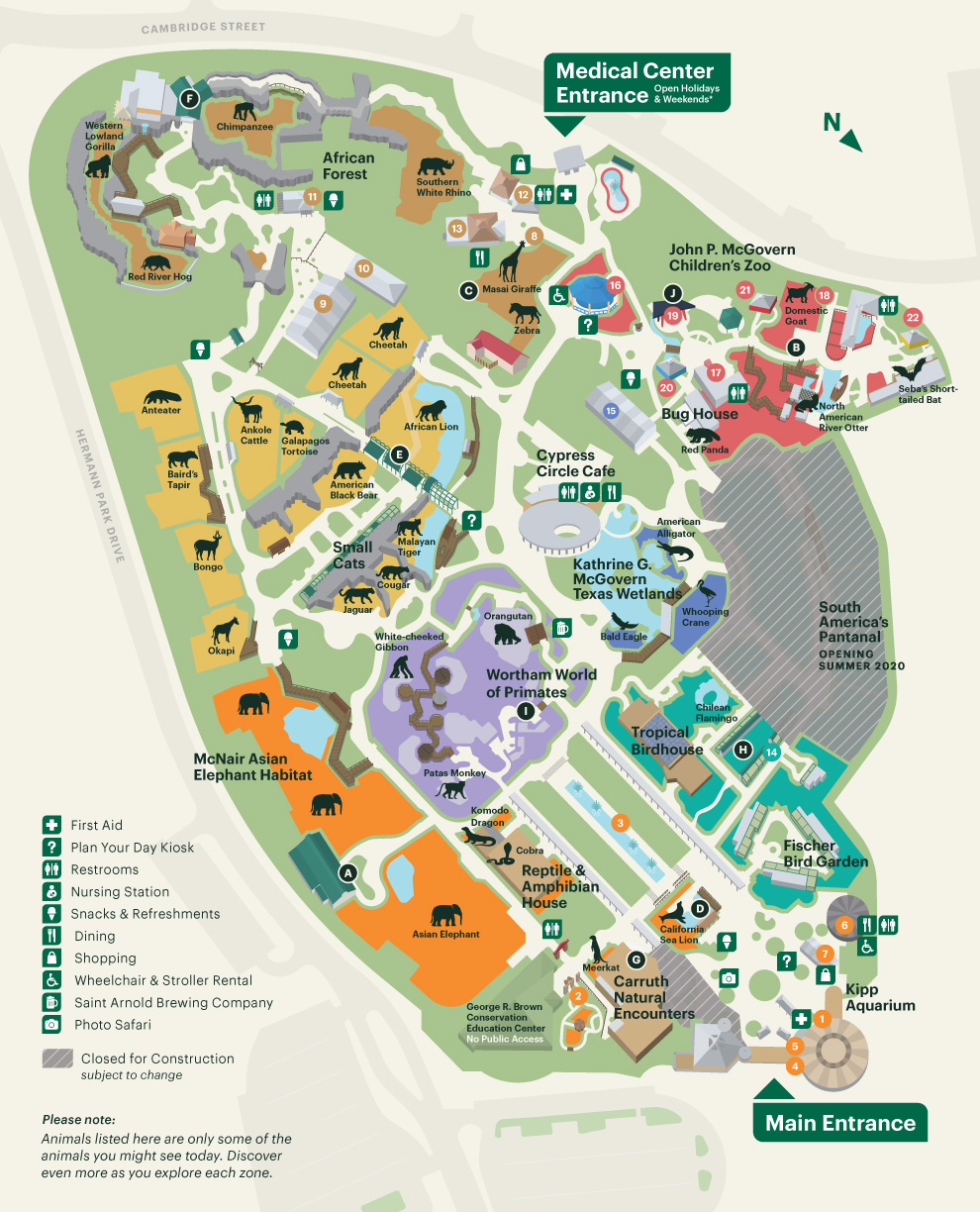
Meet the Zoo’s Tree Guardians!
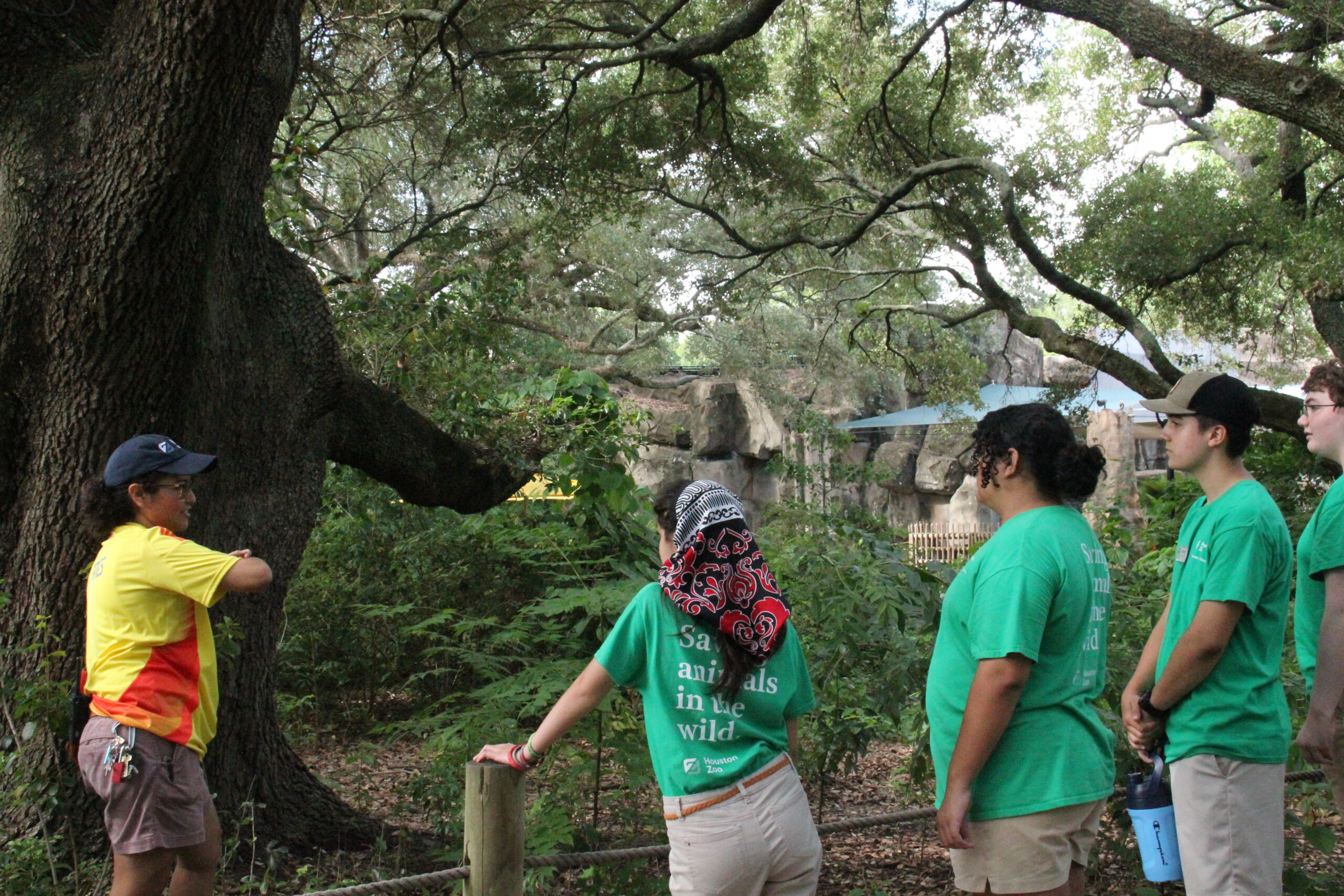
Meet Mel, the Houston Zoo’s Horticulture Supervisor! She has worked at the Houston Zoo for 5 years and as a Horticulture Supervisor for a year, and she has already made an impact on the trees in the Zoo through her diligent maintenance and planting. Without her and the team, the Houston Zoo would never have been as green and vibrant as it is today. Through an interview, we got to know a little bit more about what makes this department special.
Q: What is your favorite part about this job?
A: There’s something green everywhere you look. I like it because with the animals, you walk around the Zoo and you travel the whole world, but it also goes the same for the plants. It’s neat seeing people enjoy the plants that we put so much work into maintaining and keeping alive.
Q: What does a day in the life of a horticulturalist look like?
A: We start out early in the morning to discuss our game plan for the day. Then, we survey all 55 acres of the Zoo to watch for things like covered signs or if a branch fell overnight. We have different lenses that we wear. We’re like, all right, this is best for the animals and this is best for the people. If we need to, we clean up, trim some trees, and cut some branches to make it safer for both the animals and the keepers. Then, we sharpen our tools, clean them, maintain them for the stewardship of our resources here, and make sure they last a long time.
Q: What do these trees mean to you?
A: These same trees have been here since I was visiting the Zoo as a baby. Abuelo, the 500 year old oak tree, saw me as a baby and now I’m here working full time with trees like Abuelo. I think it’s really special too: a lot of Houston pride for sure!
Q: How many trees are on Zoo grounds?
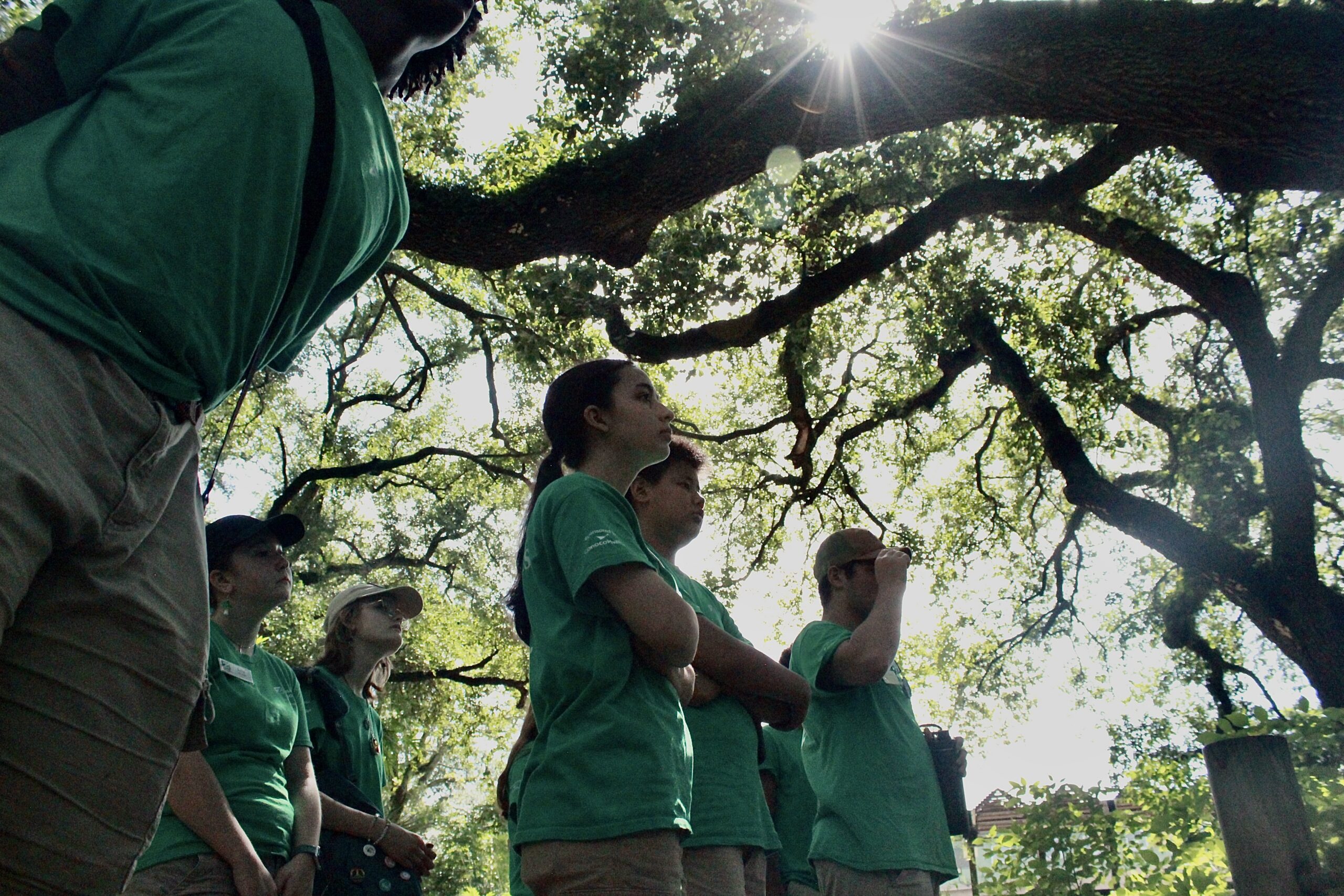
A: We tagged 1,200 trees with little gold tags. That’s what we did with our tree inventory, but there are definitely more. So at least 1,200, but there are way more.
Q: What types of plants does the animal team use?
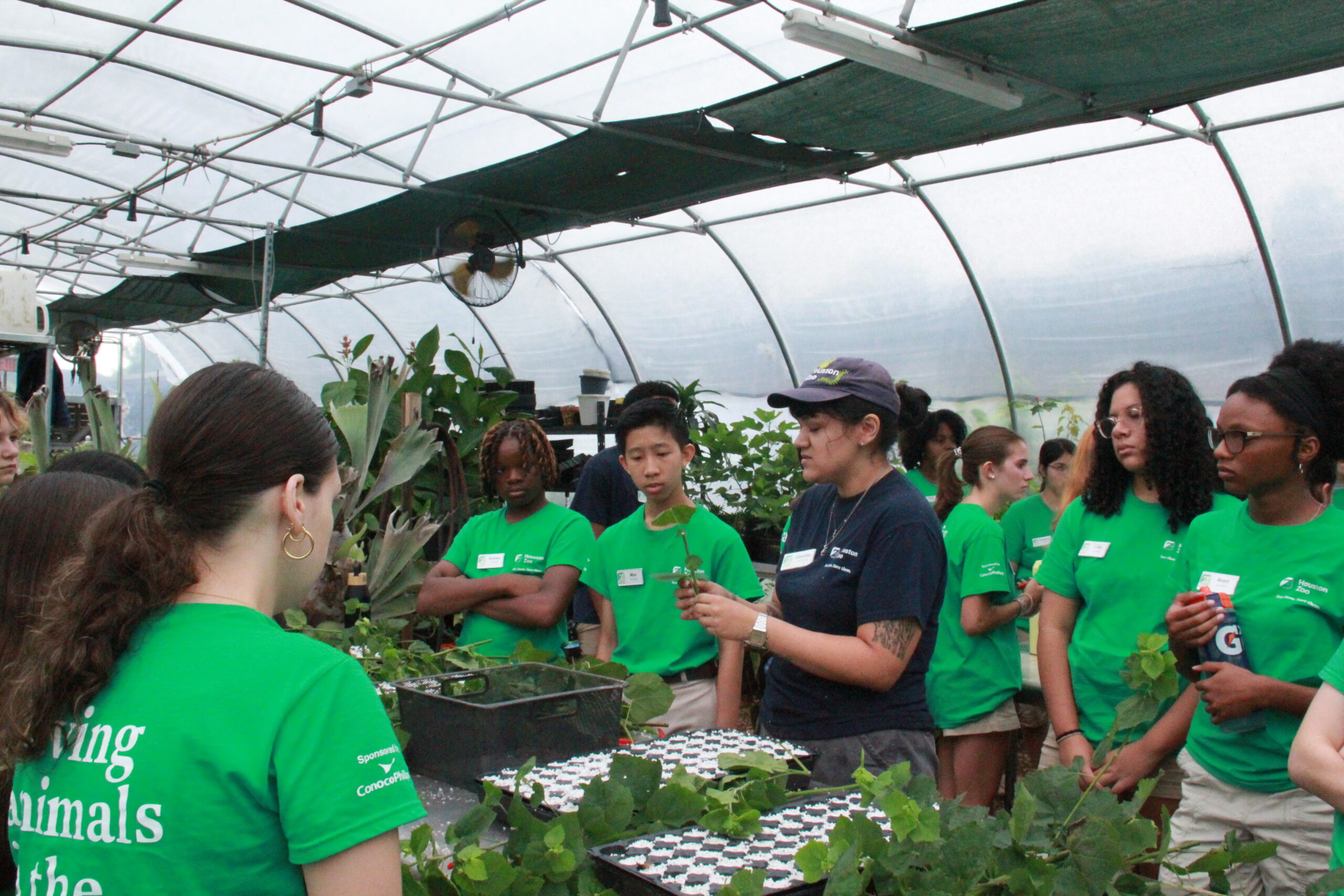
A: I think each department has their own favorites or plants that we can give out. For example, the reptiles really enjoy Turk’s cap, the gorillas like banana leaves, and the elephants like bamboo; although, a lot of the animals can’t eat oak, or the acorns themselves, so it just depends on which animal section you’re talking about. I think that it’s a cool connection that the animal keepers and horticulture have, because we work closely with animal teams every day to make sure food and browse is safe for the animals.
Q: Does the Houston Zoo work with any organizations regarding horticulture and/or reforestation?
A: The Houston Zoo has conservation partners, and a lot of them do forest restoration work. For example, Proyecto Tití in Colombia does a lot of forest restoration for the cotton-top tamarins and Ewaso Lions in Kenya just started a tree nursery. Earlier this year, we also worked locally with MD Anderson hospital to do a prairie rescue when they were constructing a new building. We also work with other zoos to communicate to each other about our own horticulture departments.
Q: What is something you would like guests to know about the Zoo’s trees or Horticulture Department?
A: Not to get too science-y, but trees are alive: they experience, they feel things, and they get stressed too, so just be kind to their branches because they tell such neat stories. If you look up, you’ll learn something new from a tree. Plants play such a big role here at the Zoo for the people and the animals.
As you can tell, trees and native plants are a big part of the Houston Zoo—they are the lungs of our grounds. From providing shade for guests and creating homes for wildlife to cleaner air and enrichment, the Zoo wouldn’t be the same without them. This is why the Horticulture team—the guardians of the Zoo’s greenery—is so important for the Houston Zoo and all the residents within it, whether they have leaves or not.
This blog was written by members of Houston Zoo’s Zoo Crew Teens, Isis Yang and Nora Ramesha. Through hands-on conservation projects, wildlife education, and community service, Zoo Crew teens learn how their actions can help save animals in the wild. To learn more about Zoo Crew and Houston Zoo Teen Programs, visit Houston Zoo Teen Programs.