Small Arrivals, Big Conservation Milestones
Houston Zoo Welcomes New Generation of Reptiles
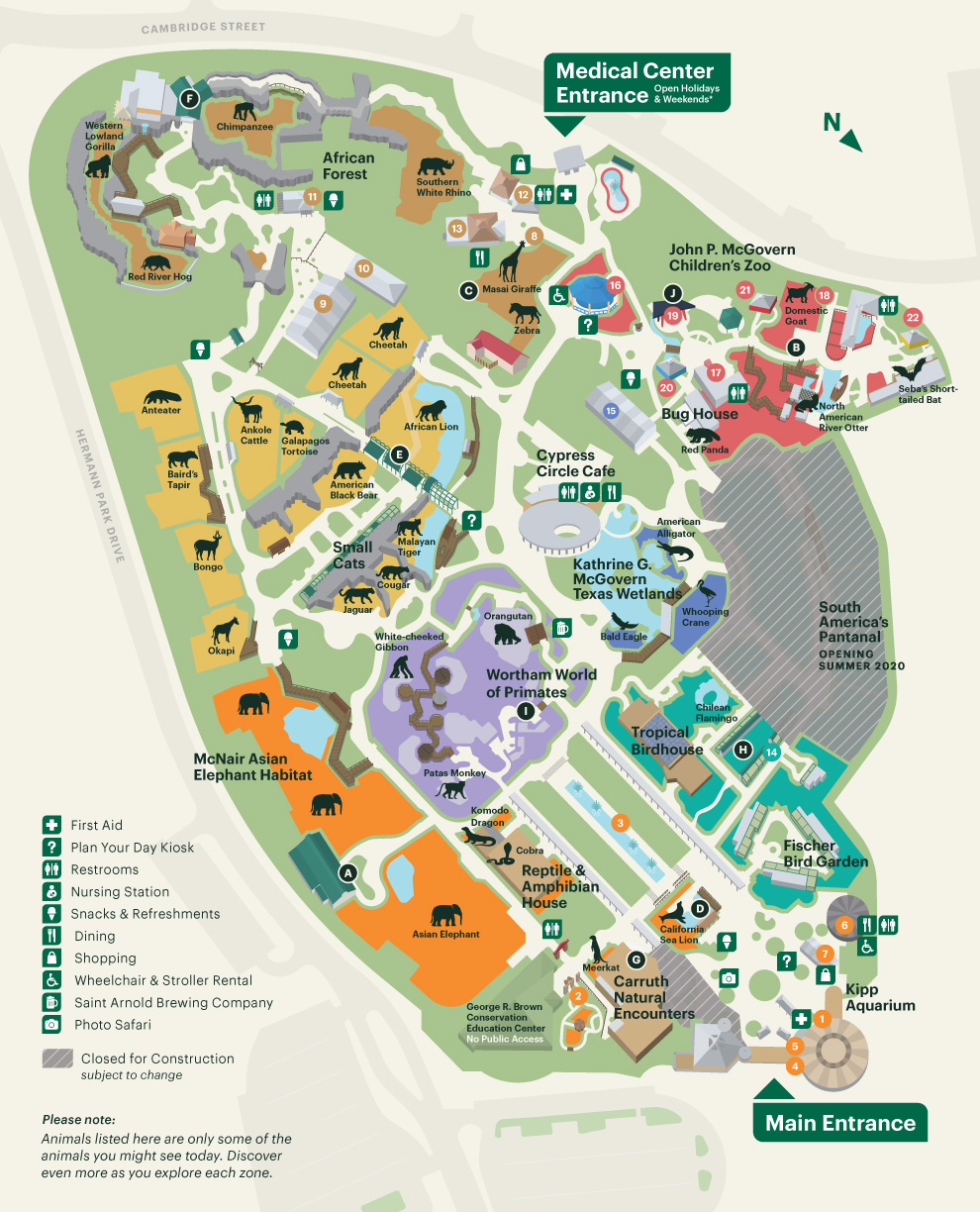
Houston Zoo is kicking off spooky season by welcoming a new generation of reptiles, including several species that represent significant conservation successes. The births and hatchings highlight the Zoo’s commitment to expert animal care. This season has resulted in a new generation of reptiles, including the Zoo’s first-ever Hosmer’s spiny-tailed skinks, Henkel’s leaf-tailed geckos, five healthy eyelash pit vipers and the return of young star tortoises. Guests can see these new additions in a special habitat designed specifically for them as soon as they walk into the Zoo’s Reptile and Amphibian House, next to the reticulated pythons.
Several of the new arrivals are the first of their kind in Houston Zoo history, while others are the result of carefully managed breeding recommendations through the Association of Zoos and Aquariums’ (AZA) Species Survival Plan® (SSP).
The Zoo is celebrating the arrival of baby star tortoises, giving Zoo guests the first opportunity in recent years to see the species at Houston Zoo. Star tortoises get their name from their shell patterns that look like stars but no two shells look exactly alike. The star patterns vary considerably between individual tortoises and change as they grow.
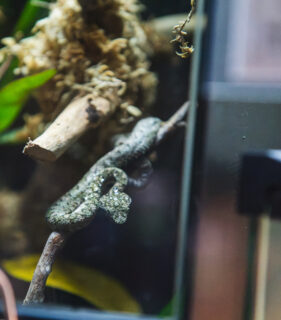
Five healthy eyelash viper babies have also arrived at the Zoo. Eyelash vipers give birth to live young who are fully independent with venom and functional fangs. The most recognizable feature of the species is their “eyelashes” which are actually scales.
The birth of Hosmer’s spiny-tailed skinks marks a first-ever birth for Houston Zoo. Unlike many reptiles, Hosmer’s spiny-tailed skinks are a live-bearing species and newborns look like miniature versions of mom and dad. Their body scales have sharp ridges while their tail scales have prominent spines. When threatened, they wedge themselves into rock crevices and puff up their bodies making it extremely difficult for a predator to pull them out.
The Zoo is also welcoming baby Henkel’s leaf-tailed geckos, the result of SSP-recommended pairings. These births contribute to carefully managed populations of this distinctive species and demonstrate the important role accredited zoos play in maintaining genetically healthy populations of animals. Henkel’s leaf-tailed geckos are the masters of disguise. Their tail is essentially a built-in camouflage accessory. These species are nocturnal, excellent climbers and have huge eyes. The size of their eyes is an adaptation for seeing in low-light conditions. While they have eyelids they can’t blink so they use their tongues to clean their eyes.
These new reptiles represent more than exciting additions to the Zoo, they are part of a larger effort to safeguard wildlife for generations to come. Guests help support that work every time they visit Houston Zoo. A portion of every Zoo ticket and membership directly supports wildlife conservation partners around the world, helping protect species and the ecosystems they depend on.
###
The Houston Zoo connects communities with animals, inspiring action to save wildlife. Established in 1922, today the Zoo is a leading conservation and education nonprofit organization providing care to thousands of animals. All while remaining a cherished destination for fun, family, and inspiration for all of Houston’s diverse communities. The Houston Zoo is accredited by the Association of Zoos and Aquariums (AZA), a 501(c)3 non-profit organization dedicated to the advancement of zoos and aquariums in the areas of conservation, education, science, and recreation. To stay informed about the Houston Zoo, visit www.houstonzoo.org.