Saving Summer Wildlife: Meet Genoveve the Ocelot
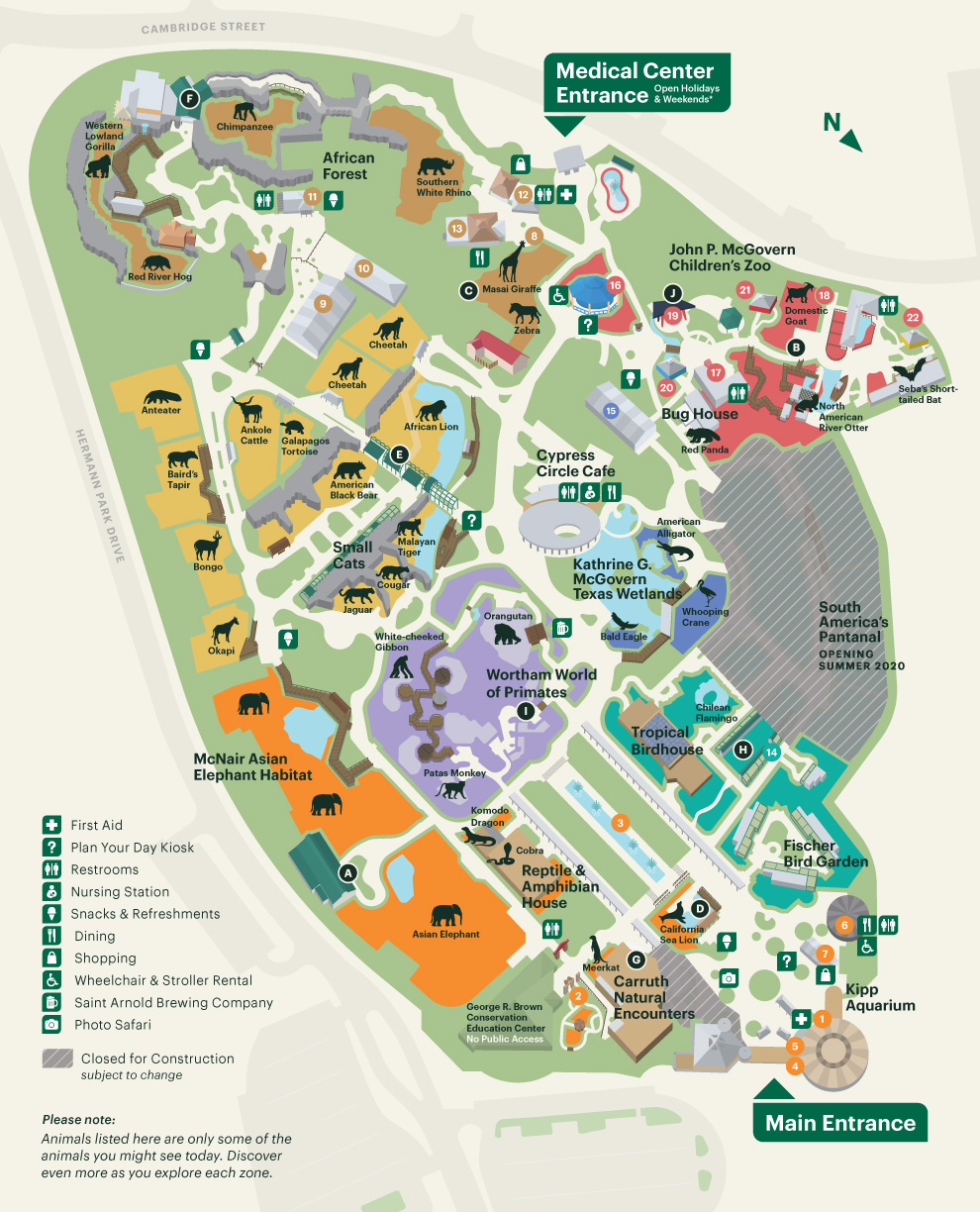
Ocelots can be found throughout the Americas and are the most imperiled wild cats in Texas, with only 100 left in the wild. This decline is due to deforestation, habitat destruction and fragmentation, predator control activities such as trapping, low genetic diversity, and vehicular collisions. Ocelots are a crucial part of the Texas food web, as they are considered a keystone species because they ensure that the ecosystem remains balanced.
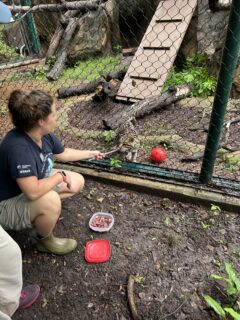
Here at Houston Zoo, we have our own ocelot representative, Genoveve! She can be found across the black bear habitat beside our fossa and clouded leopard. Genoveve came to Houston Zoo six years ago from Cincinnati Zoo. She has since given birth to two litters. In order to get to know Genovove better, we interviewed one of her keepers, Jenna. Jenna has worked with Houston Zoo for eight years and with Genoveve for about six; together they have developed a strong friendship and trust with one another over the years.
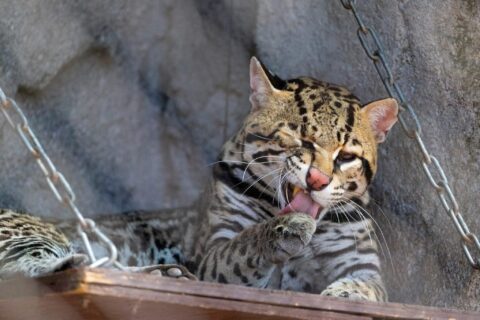
Let’s meet Genoveve and Jenna and learn about Genoveve’s personality, favorite food, enrichment, and behaviors.
Q: How would you describe Genoveve’s personality?
A: Genoveve believes in a very strong foundation of trust, so you have to work very hard to earn her trust in order for her to deem you worthy of working with her. I’ve worked with her for six years, so I’ve been able to really make a nice friendship with her. When she first moved here it was a little scary for her, so we tried to make it as comfortable for her as possible. In order to make her feel more welcomed we offered Genoveve her favorite treats and through that we were able to build an amazing friendship with her.
Q: What does she eat in a day?
A: She probably eats around a pound of food in a day. Like all cats, ocelots are what’s known as gorge feeders. In the wild, they would eat kind of like us on Thanksgiving. They eat so much until they’re about to pop. Here, we take that giant amount, and we spread it throughout the week. She eats every day, whereas ocelots in the wild wouldn’t eat every day. On an average day, we have what looks like ground meat that you see at the grocery store, but it comes packed with all the vitamins and minerals that she needs. That’s her base diet. After her main course, she usually has a mouse, a rat or a fish. She likes a lot of variety. Who doesn’t?
Q: Does she have a favorite enrichment item?
A: Her favorite enrichments are logs. She loves to rub and scratch on them. A lot of cats at home love to scratch and Genoveve is no exception. She loves to scratch on anything and everything. That is a really good way for her to keep her scent strong, because this is her home and she doesn’t want another ocelot moving in and encroaching on her turf, right? So she’s got to keep it nice and smelly.
Q: What is your favorite part of working with Genoveve?
A: My favorite part of working with Genoveve is building trust. One of the coolest parts of our relationship is training. As Genoveve’s trainer, she and I get to deal with all sorts of challenges. One of them is getting injections. For animals and people it can be stressful and scary, so I do my best to make it a positive experience. Genoveve knows how to get injections without fussing, and afterwards we give her tasty treats as a little reward. It’s really cool. Being able to see her in all stages of life is probably one of the most rewarding experiences.
As a contributor to ocelot conservation efforts, Houston Zoo participates in the Association of Zoos and Aquariums (AZA), Species Survial Plan (SSP), and Saving Animals From Extinction (SAFE) program for ocelots. The SAFE Ocelot program is working towards the recovery and reintroduction of ocelots into their historic native habitat through the Recover Texas Ocelot Project.
Currently, there are two fragmented ocelot populations in South Texas. One is found at the Laguna Atascosa National Wildlife Refuge and the other on private ranchlands owned by the East Foundation. Although ocelots have these two safe spaces to live in, habitat fragmentation makes travel between the Wildlife Refuge and ranchlands dangerous due to vehicle collisions. Habitat fragmentation also reduces genetic diversity in the ocelot population. In order to help the ocelots’ plight, a new facility in Kingsville, Texas will open later this Fall in order to give ocelots a new chance to repopulate.
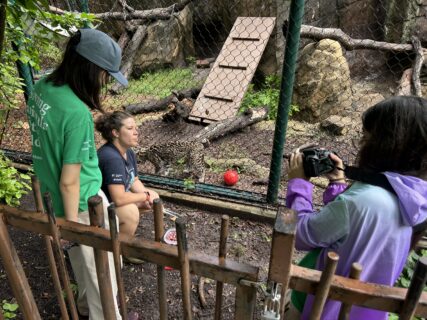
The Zoo Crew help ocelots in the wild by planting native plants in collaboration with Camp Zoofari in order to create wildlife-friendly spaces and educate the next generation. At home, our readers can also help ocelots by planting native Texas plants and participating in the Ocelot Safe Harbor Agreement.
This blog was written by members of Houston Zoo’s Zoo Crew Teens, Alexis Kiew and Francesca Melendez. Through hands-on conservation projects, wildlife education, and community service, Zoo Crew teens learn how their actions can help save animals in the wild. To learn more about Zoo Crew and Houston Zoo Teen Programs, visit Houston Zoo Teen Programs.