Houston Zoo’s Tucker and Nelson Head to New Home After Years of Impact
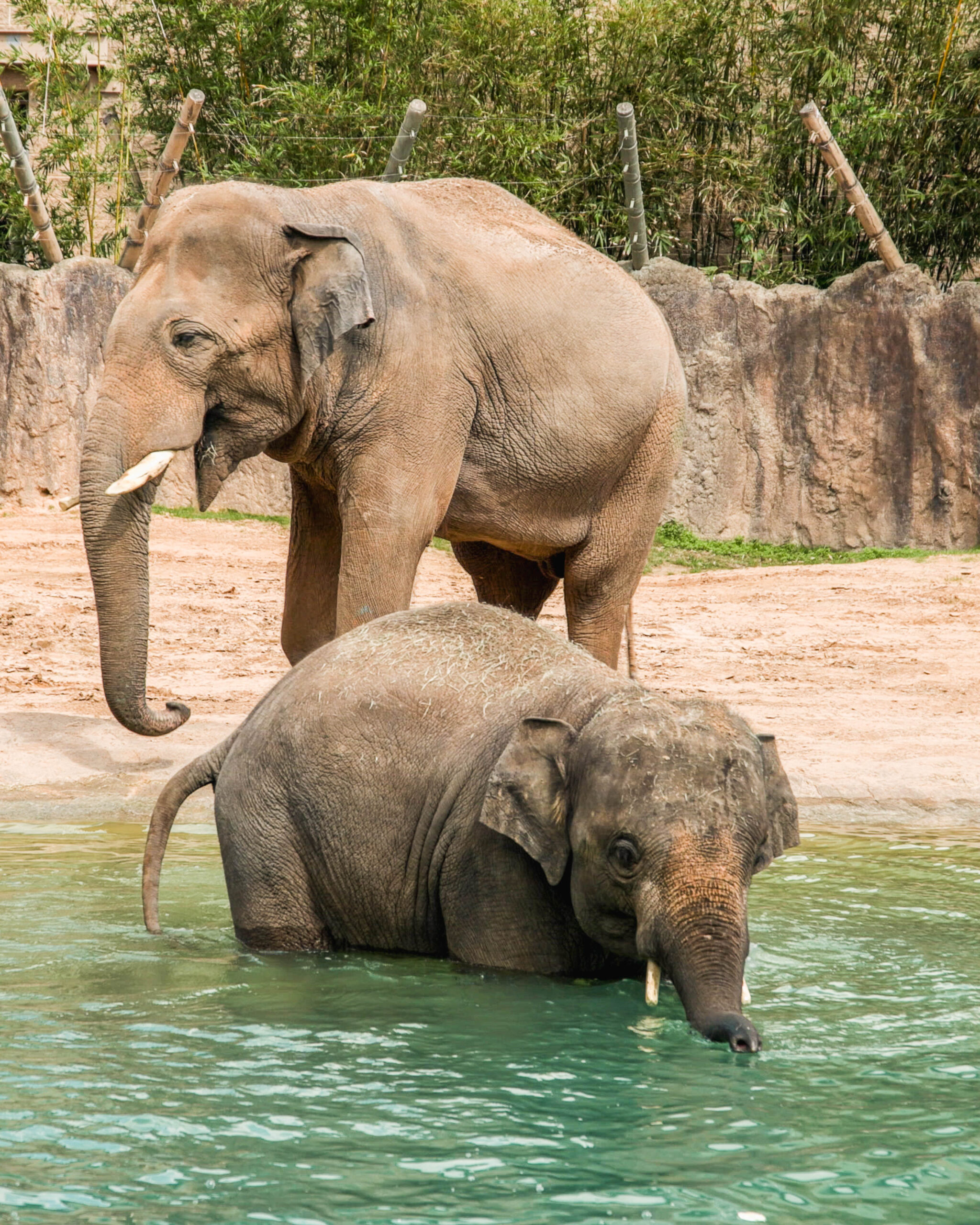 Soon, Tucker and Nelson will move to a new Association of Zoos and Aquariums-accredited facility. But before they go, we want to share their story and the mark they have left on the Houston Zoo and the work we do for elephants everywhere.
Tucker arrived at the Houston Zoo in 2008 alongside his mother, Tess, coming to Houston from California at just three years old. In the years since, he has grown into one of the most well-known members of our herd. Smart and quick to learn, Tucker spent his younger years as a classic juvenile male, full of energy and always looking for a reaction. He seemed to delight in splashing unsuspecting guests from the pool. He has matured a great deal since those days, but anyone who has spent time watching him knows the mischief has never gone away.
Nelson’s story begins right here in Houston. Born on May 12, 2020, to Shanti, his arrival came in the middle of the pandemic while the Zoo was closed to the public. His first moments of life were seen only by the dedicated team of keepers and veterinarians who had never stopped showing up for the animals in their care. And those first moments were anything but routine. Within his first hour of life, the team discovered he was hemorrhaging from a torn vessel in his umbilical cord. They acted quickly, performing emergency surgery to stop the bleeding and reuniting him with his mother the same day. He was standing and nursing before the day was over. His survival reflects the skill and dedication of the people who care for this herd every day.
Both Tucker and Nelson have been part of the Houston Zoo’s ongoing work to monitor and combat EEHV, Elephant Endotheliotropic Herpesvirus, a disease well-documented in elephants in Thailand and across Asia and one of the greatest threats to young elephants worldwide. In partnership with Baylor College of Medicine, the Zoo’s veterinary team is developing an mRNA vaccine with the potential to protect elephants in human care and, ultimately, those living in the wild.
Their move is part of that same mission. Because Tucker and Nelson share close genetic ties to much of our family herd, the AZA Species Survival Plan® (SSP) recommended this move to create new opportunities for the population and strengthen the long-term health of Asian elephants in human care.
We hope you will visit soon and spend some time with the boys before they head to their new home.