Golden Years, Cutting-Edge Care
Houston Zoo Elevates Animal Health for Its Beloved Senior Animals
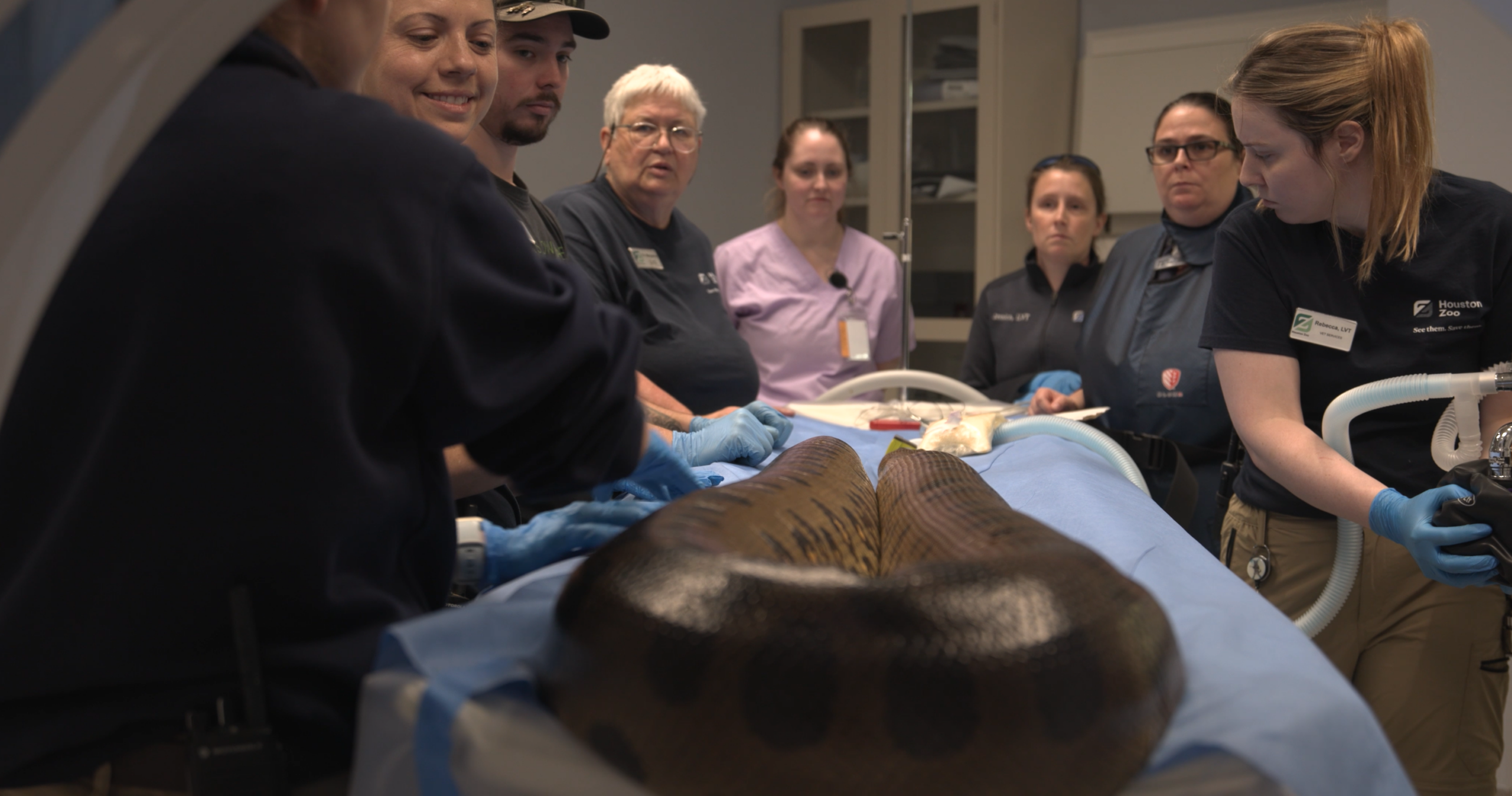 From small and furry to long and scaly, Houston Zoo’s veterinarian team is now able to elevate the world-class care it provides to all its animals well into their senior years with the new CT machine. For older animals like Florence, the Zoo’s twenty-one-year-old green anaconda, the addition of imaging technology is a non-invasive tool that minimizes animal stress while maximizing diagnostic precision, reinforcing the Zoo’s commitment to exceptional medical care.
Florence is the third largest snake at the Zoo and recently underwent a routine senior wellness exam that now includes CT imaging. At 13 feet, 6 inches long, her care team had to get creative to ensure she fit into the machine. While Florence’s exam is routine, it’s a critical part of the Zoo’s proactive approach in caring for aging animals. Thanks to the Houston Zoo’s new advanced technology, veterinary staff were able to capture highly detailed images of the anaconda’s internal structures, providing invaluable insight without the need to take animals off grounds to a referral clinic for this advanced imaging.
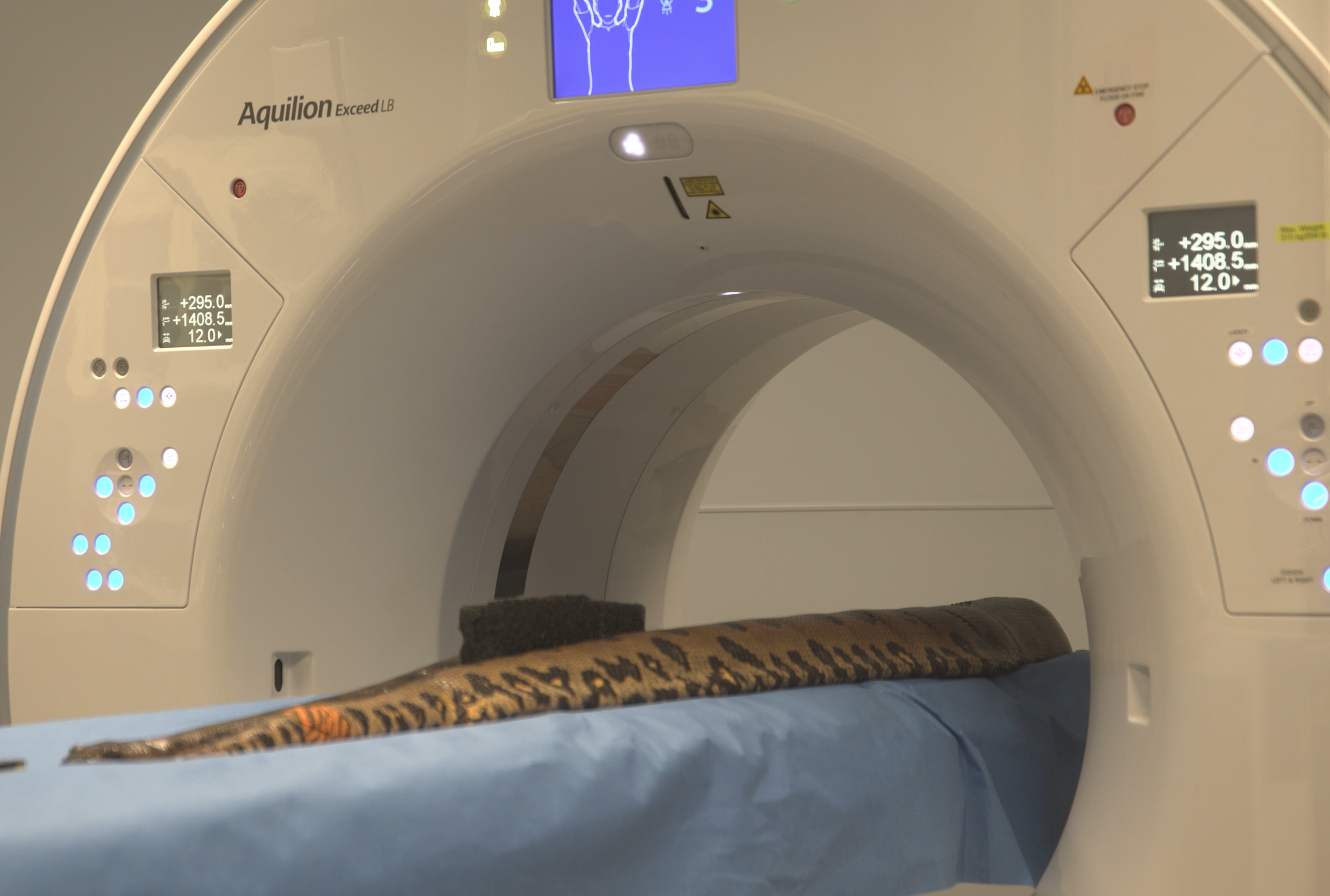 Results showed Florence is in excellent condition for her age and well beyond the typical lifespan of her species in the wild. This proactive, in-depth care not only ensures Florence’s continued wellbeing but also contributes valuable knowledge to the field of reptile medicine. Reptiles are incredibly resilient, but they can also mask signs of illness. This technology allows the team to detect potential issues earlier and ensure animals, like Florence, remain comfortable and thriving well into their golden years.
Every visit to the Houston Zoo helps save wild anacondas in South America. A portion of each Zoo ticket and membership directly supports the Zoo’s conservation partner, Instituto de Conservação de Animais Silvestres (ICAS). Their community fire brigade works in the Pantanal in Brazil to prevent and combat wildfires that threaten the critical wetlands where anacondas live. By protecting this habitat, ICAS helps ensure wild anacondas and other species can survive and thrive.